SID 2026  ·  Poster

Artificial Intelligence-Powered Prediction of Mohs Surgery Post-operative Appearance

Jasmin Simi Zhang1,2, Changan Chen1, Juze Zhang1, Shrinidhi Lakshmikanth1, Sumaira Z. Aasi1, Justin M. Ko1, Albert S. Chiou1, Ehsan Adeli1, Roxana Daneshjou1
1Stanford University, USA    2Memorial University, Canada
✉ Contact

Background

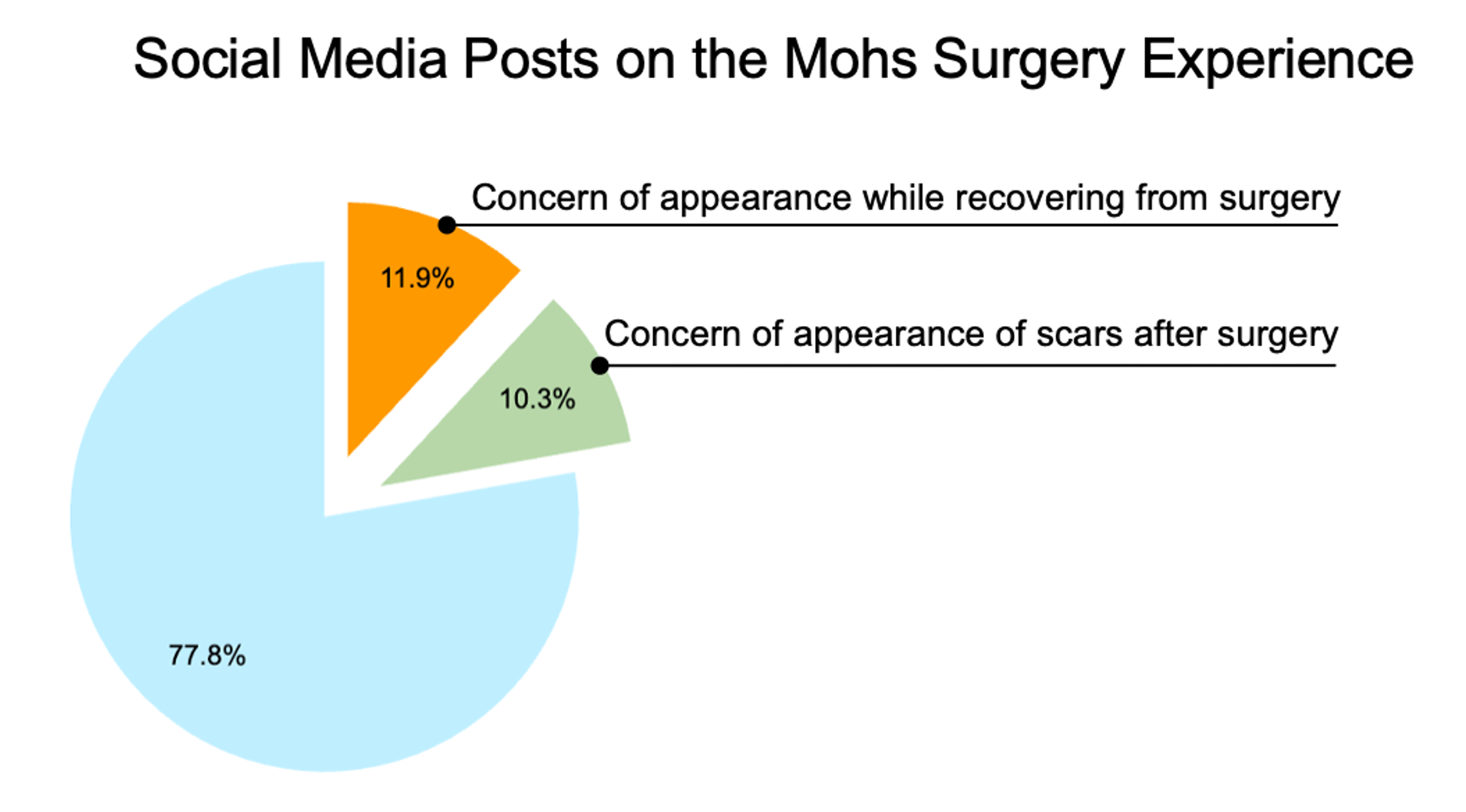
Mohs micrographic surgery involves complex intraoperative decision-making, making prediction of post-operative appearance challenging. Scarring has significant psychological impact on patients.[1]

Expectation Mismatch: Actual scars are typically 2.2× larger than patient expectations and 1.1× larger than clinician expectations.[2]
AI Mohs Surgery Prediction overview

We present a personalized AI tool that gives patients a realistic preview of post-operative appearance and helps clinicians visualize different reconstructive approaches before surgery.

Stanford Mohs Surgery Dataset

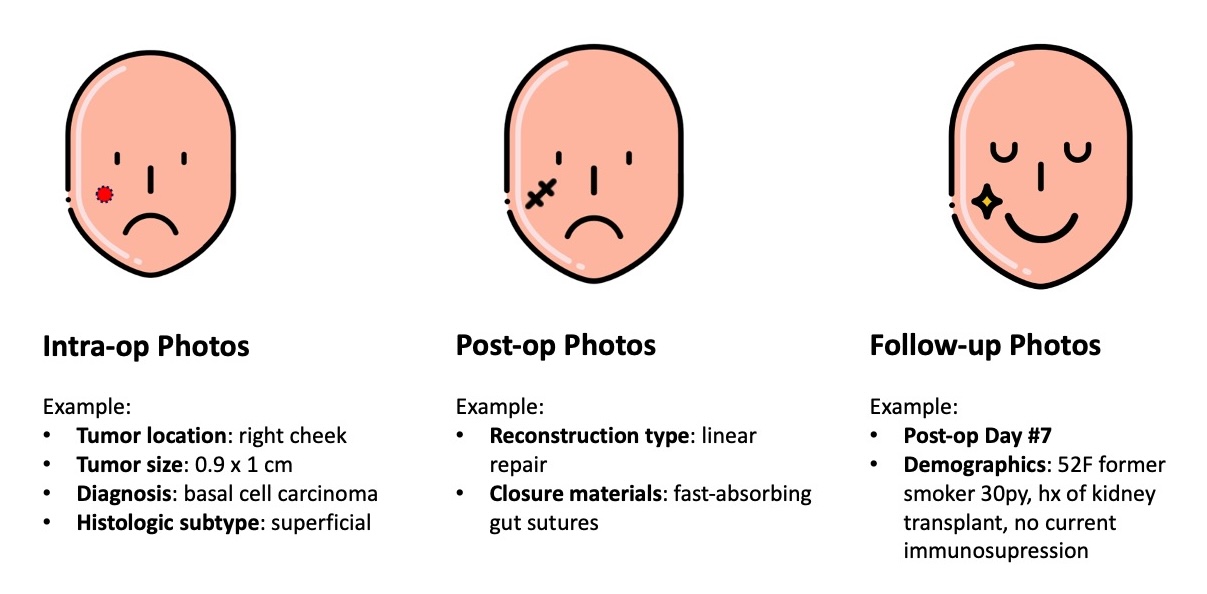
We curated the largest longitudinal, matched clinical image dataset of Mohs surgery to date, spanning 2012–2025 across 8,033 patients.

17,516
Intra-operative photos
21,315
Post-operative photos
19,548
Follow-up photos

Extensive annotation includes:

Example from the Stanford Mohs Surgery Dataset
Example from the Stanford Mohs Surgery Dataset showing longitudinal images across a single patient's care.

Methods

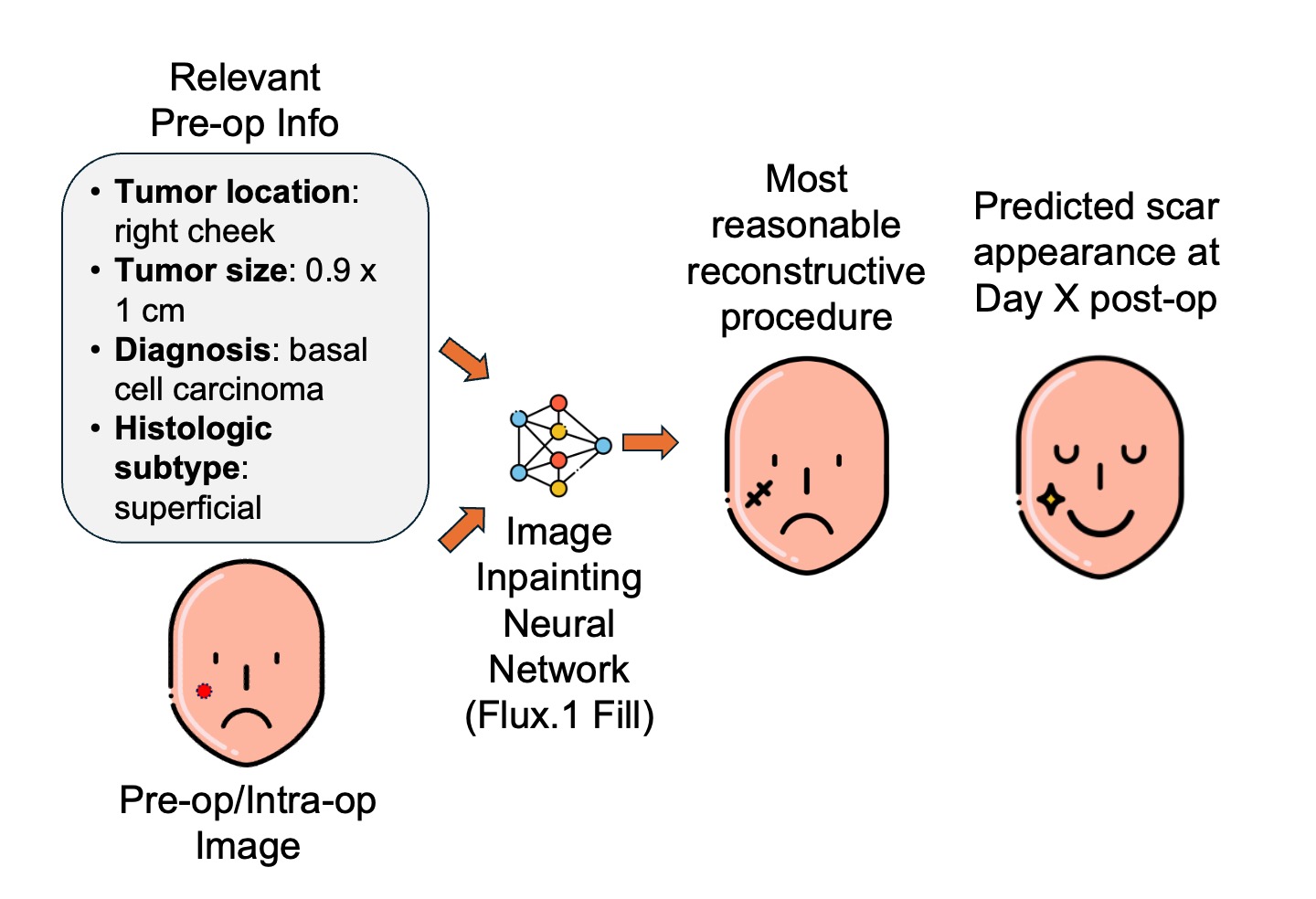
We leverage Flux.1 Fill[3], a state-of-the-art foundation model for image inpainting, to synthesize the surgical closure region while preserving the patient's unique facial features.

Model pipeline diagram
Illustration of Model Pipeline

Key challenges addressed:

Results

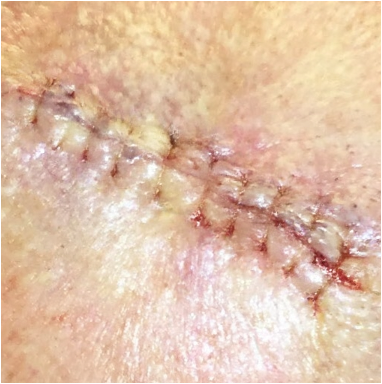
Our model produces realistic and controllable post-operative predictions across a wide range of reconstruction types.

Quantitative Analysis

Near-chance accuracy and near-zero inter-rater agreement indicate that board-certified dermatologists could not reliably distinguish AI-generated predictions from real post-operative outcomes, demonstrating the realism of our model.
First study to demonstrate AI-based prediction of post-operative appearance following Mohs micrographic surgery.

Supported reconstruction types:

Additional reconstruction types in progress:

Qualitative Results

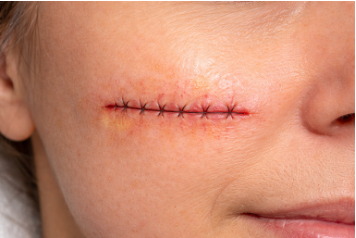
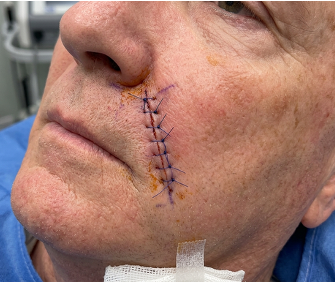
We compare our model against state-of-the-art generative models on a standardized prompt: "Generate a photorealistic image of a Mohs micrographic surgery linear closure."

Flux.1 Fill output
Our Model
GPT-5.4 output
GPT-5.4
Gemini Nano Banana 2 output
Gemini Nano Banana 2

Facial images are not shown here to protect patient privacy.

Future Work

Funding

This work was supported in part by the Stanford Institute for Human-Centered Artificial Intelligence (HAI).

References

  1. P. Kamath, C. Kursewicz, G. Ingrasci, R. Jacobs, N. Agarwal, and K. Nouri, "Analysis of patient perceptions of Mohs surgery on social media platforms," Arch Dermatol Res, vol. 311, no. 9, pp. 731–734, Nov. 2019, doi: 10.1007/s00403-019-01944-7.
  2. W. C. Fix, C. J. Miller, J. R. Etzkorn, T. M. Shin, N. Howe, and J. F. Sobanko, "Comparison of Accuracy of Patient and Physician Scar Length Estimates Before Mohs Micrographic Surgery for Facial Skin Cancers," JAMA Network Open, vol. 3, no. 3, p. e200725, Mar. 2020, doi: 10.1001/jamanetworkopen.2020.0725.
  3. O. Greenberg, "Demystifying Flux Architecture," arXiv, Jul. 2025, arXiv:2507.09595v1 [cs.CV].